By Manoj Kumar · February 25, 2026
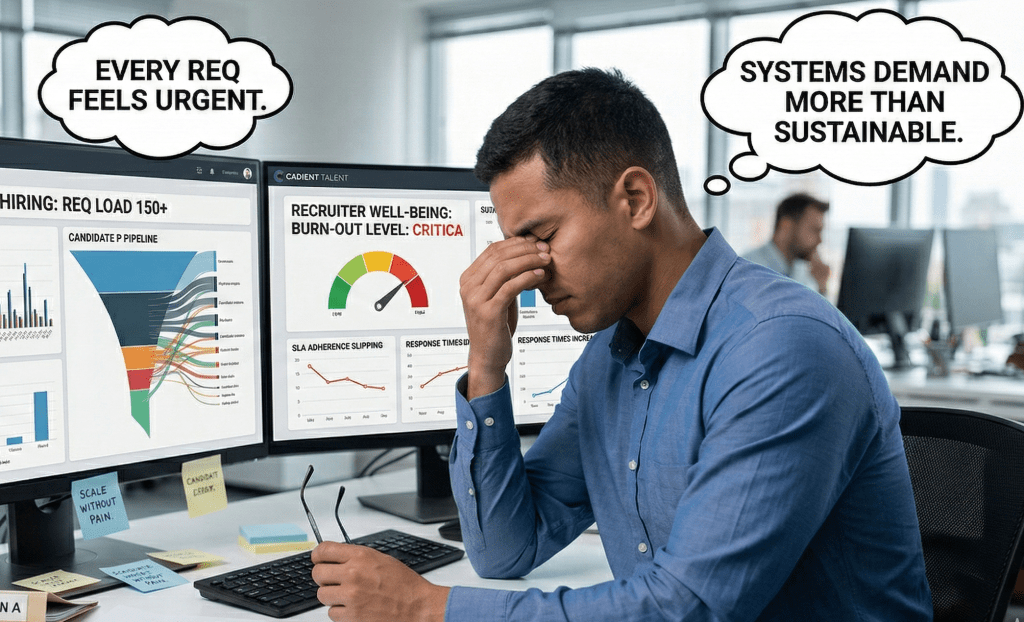
If your recruiters feel exhausted, checked out, or ready to leave, the problem is not their grit. The problem sits inside your high-volume hiring process. You push teams to move faster without removing friction, making burnout inevitable. You need recruiter burnout solutions that attack the work design, not the people.
Automation gives you that lever. When used intentionally, hiring process automation strips out low-value tasks, protects focus, and gives recruiters a stronger signal about who to move forward with. You trade spreadsheet fatigue for clear decisions. You trade busywork for conversations that keep humans in hiring.
Understanding Recruiter Burnout in Modern Hiring
High-volume hiring has shifted, but many teams still rely on legacy tools and habits. You face more requisitions, more applicants per role, and more pressure from your operators. You also face candidates who expect quick answers and clear updates.
Burnout occurs when recruiters feel trapped between those forces and the constraints of manual work. They chase hiring managers for feedback. They repeat the same screen questions all day. They fight with outdated systems that slow every move.
Over time, that drain leads to errors, missed opportunities, and higher recruiter turnover. You see open requests sit longer. You see, new recruiters leave before they ever reach full productivity. Recruiter burnout prevention needs to focus on that reality, not surface perks.
Key Causes of Recruiter Burnout
When you break down the process, the drivers of burnout are clear. That is good news, because it gives you clear targets for recruiter burnout solutions.
Volume without prioritization
Recruiters spend hours sorting through unqualified applications. Without smart scoring, every resume looks equal in the queue. That leads to constant context switching and low-impact effort.
Manual scheduling and follow-up
The back-and-forth on interviews, reminders, and rescheduling eats up days of work time. Manual email templates and one-by-one updates drain energy quickly, especially during seasonal surges.
Weak hiring signal
If you lack predictive insight into quality and retention, recruiters end up guessing. They chase gut feel, hire for speed, and then see an early spike in turnover. That loop increases stress and scrutiny.
Fragmented systems
Many teams manage hiring across multiple tools that do not integrate. Recruiters re-enter the same data. They log in to multiple systems to track status. Every handoff is a chance for delay and confusion.
Constant urgency from the field
Store and field leaders need talent now. They send frequent messages and escalate every open role. Without clear visibility and automation, recruiters spend most of their day reacting rather than driving a plan.
Also Read: AI Hiring Platforms vs Traditional ATS
What Is Recruitment Automation
Recruitment automation uses technology to handle repeatable hiring tasks, guide decisions, and keep candidates moving without constant manual effort. It does not remove the recruiter from the process. It removes friction from the process that first hits the recruiter.
Strong recruitment automation tools span the full recruitment lifecycle. From job posting and sourcing, through screening and scoring, to scheduling, communication, and background checks. When these tools live in a single environment, you reduce clicks, data entry, and delays.
For high-volume employers, talent acquisition automation must also factor in retention. The goal is not only to make hires faster. The goal is to hire faster and keep them. That is where predictive models and tenure insight shift the recruiter role from transaction manager to talent advisor.
How Automation Reduces Recruiter Workload
Automation removes work in two ways. It eliminates tasks that never needed human judgment. It reshapes tasks that still require human input to start with better information.
With recruiter burnout solutions rooted in automation, your teams stop doing low-value work such as manual status updates and basic screen questions. They focus on candidate conversations, hiring manager alignment, and final selection. The work feels more meaningful, and output improves.
Cadient SmartSuite™ supports this shift with connected modules that aim to reduce recruiter workload at each stage. SmartSource™, SmartMatch™, SmartScore™, SmartScreen™, SmartTexting™, and SmartTenure™ each remove a layer of friction that usually gets pushed to your team.
Automating Repetitive and High-Volume Hiring Tasks
To see impact fast, you start with the repetitive tasks that slow every requisition. Hiring process automation shines here.
Application intake and routing
Automation screens for minimum requirements, parses data into your ATS, and routes candidates to the right requisition or location. Recruiters do not sift through duplicate applications or correct basic fields.
Screening and scoring
SmartScore™ evaluates candidates based on your historical hiring and retention data. Recruiters receive a ranked list instead of a raw stack. That turns hours of manual review into quick, high-quality shortlists.
Communications and reminders
SmartTexting™ sends confirmations, reminders, and status updates automatically. You keep candidates warm without adding more tasks to individual recruiters. This reduces no-shows and follow-up stress.
Background checks and compliance steps
This saves time since SmartScreen™ manages background screening automation. By doing this, there are fewer portals to track, and a recruiter gets a signal on the next steps.
Requisition updates and reporting
Automated dashboards take data from several parts of the process, which reduces time spent by recruiters both in crafting reports and communicating process status.
Improving Recruiter Productivity and Focus
Recruiter burnout prevention ties directly to focus. When your team can work in sustained blocks on the highest-value tasks, stress levels drop, and output improves. Recruitment automation tools support that pattern.
With SmartMatch™ and SmartScore™, recruiters start each day with clear priorities. They identify which candidates are the best fit for open roles and which actions drive movement. They do not spend energy deciding where to look first.
Task queues and simple workflows keep the next action obvious. Instead of fifteen browser tabs, recruiters work in one environment. That reduction in noise makes space for stronger conversations with candidates and hiring managers.
Over time, this shift changes how leaders view recruiter productivity. You move away from measuring manual activity volume. You measure quality of hire, time to fill, and early tenure. That supports healthier expectations and more sustainable workloads.
Also Read: Designing High-Volume Hiring Workflows That Scale Across Locations and Roles
Impact of Automation on Recruiter Well-Being
Recruiter burnout solutions only matter if they protect real people. Automation gives your team three critical forms of relief.
Reduction in cognitive load
When routine decisions are handled by the system, the recruiter makes fewer decisions per hour. This leaves room to address complex dialogues. At the end of each day, people are less drained.
Greater sense of control
No guessing games about pipelines, updates, or good dashboards anymore! Recruiters are aware of where reqs are and what still needs to be done. Having control relieves anxiety, and relieved anxiety translates to lower burnout.
More meaningful work
Automation removes the parts of the job that feel like data entry. Recruiters spend more time advising managers, coaching candidates, and improving hiring strategies. Purpose supports resilience far better than ping pong tables or snacks.
Balancing Automation and Human Judgment
It is also important that talent automation does not override human judgment. Your recruiting staff understands context, cultural awareness, and local expertise. Machines do not.
The right balance gives automation the first pass across volume, then puts recruiters in control of key decisions. SmartTenure™ predicts likely retention based on historical patterns. Recruiters still decide how to weigh that signal against current team needs.
You set boundaries. Automation involves screening, scoring, scheduling, and status tracking. The recruit owns fit assessment, offering, and manager alignment. That split keeps bias checks and human connection in place while still reducing recruiter workload.
Transparency also matters. Recruiters should understand how scoring models work and where the data comes from. Such knowledge will foster trust in the tools and help your team make sense to hiring managers.
Challenges in Adopting Recruitment Automation
If automation is so helpful, why do many teams hesitate or stall? Because adoption involves real challenges. Strong recruiter burnout solutions must account for them up front.
Legacy mindsets and fear of control loss
Some recruiters worry that automation will make their work less valuable. Others may feel uncomfortable trusting the scoring or screening model. There needs to be good communication around objectives and a plan that keeps recruitment at the heart.
Fragmented tech stack
For many TA teams, this means managing multiple point solutions. More technology without integration can be frustrating. You need HR automation solutions that work together across systems and processes. Not another siloed system.
Change management and training
For automation to prevent or reduce burnout, people need to employ it well. For example, they need training, playbooks, and management support. Recruiters need to experience quick wins, not long, complex rollouts that add work.
Data quality concerns
Predictive tools rely on historical data. If your past data is incomplete or inconsistent, results suffer. You need a partner that understands high-volume hiring data and helps you clean and standardize inputs.
Best Practices for Reducing Burnout Using Automation
To turn recruitment automation tools into effective solutions for recruiter burnout, you need a focused approach. The goal is not more features. The goal is less friction for your team.
Start with your highest pain workflows
Map where recruiters spend the most time and feel the most stress. For many high-volume employers, this includes application review, scheduling, and communication. Prioritize automation that targets those steps first.
Set clear success metrics
Tie automation projects to specific outcomes. For example, time to first recruiter touch, recruiter requisition load, or early turnover. This maintains the focus on business value and recruiter well-being, not just feature adoption.
Involve recruiters in design and testing
Your recruiters know where the process breaks. Bring them into tool selection, workflow design, and pilot testing. Their feedback will help align talent acquisition automation with real daily work.
Standardize, then automate
In an automated framework, whatever process you feed the algorithm will be amplified. You need to establish consistency in workflows across similar roles before you scale an automated framework. This helps eliminate confusion.
Keep humans visible to candidates
Use automation to speed up processes, but keep human names and contact paths clear. Candidates should know that a recruiter is behind the process, even if messages are sent via SmartTexting™ or automated emails. This improves experience and protects the brand.
Review and refine regularly
Once in place, revisit workflows with recruiters every quarter. Look for new bottlenecks. Adjust scoring rules based on recent hiring and retention trends. Treat automation as a living system, not a one-time project.
Real-World Examples of Burnout Reduction
When you connect HR automation solutions directly to the recruiter experience, outcomes shift in specific ways. Here are examples drawn from high-volume environments where Cadient operates.
Retail hiring teams
Large store networks often push seasonal and ongoing hourly hiring through a small TA team. With SmartSource™ and SmartMatch™, recruiters receive qualified, ranked candidates already aligned to store needs. SmartTexting™ keeps candidates informed about next steps and prompts them to schedule. Recruiters report less weekend catch-up work and fewer late-night status calls from the field.
Healthcare and senior living operators
In care settings, unfilled roles directly affect patient and resident experience. Recruiters once spent hours each day screening for licenses, shift needs, and location preferences. With SmartScore™ and SmartScreen™, those checks run in the background. Recruiters are focusing on “culture conversations” and “fit.” Teams are aware that retention in critical roles eliminates the need for ongoing backfill pressure.
Hospitality and restaurant brands
Such employers may experience a high level of applications and scheduling intricacy. SmartSuite™ automates the hiring process from application to offer. This enables recruiters to focus on building relationships with local managers rather than chasing interviews. This results in better alignment with less burnout.
Conclusion
Solutions to the recruiter burnout crisis must extend beyond simple wellness or morale initiatives. If your process still relies on manual review, fragmented tools, and constant urgent requests, your team will burn out. Strong recruiter burnout prevention starts with rebuilding the work itself.
Recruitment automation tools, when used intentionally, give your recruiters room to breathe. They remove repetitive tasks, surface better signals, and keep candidates moving without constant manual effort. That protects energy and improves outcomes over time in fill, quality, and retention.
Cadient SmartSuite™ was built for intelligent high-volume hiring. SmartSource ™, SmartMatch ™, SmartScore ™, SmartTenure ™, SmartScreen ™, and SmartTexting ™ help recruiters. If you want to protect your team and strengthen results, consider a predictive, automation-first approach with Cadient as your partner.
Take a closer look at Cadient and see how intelligent hiring automation can support your recruiters.
FAQs
What are the most effective recruiter burnout solutions today?
The most effective remedies for recruiter burnout focus on work design. This includes automating hiring processes, providing recruiter productivity tools, and delivering predictive insights to reduce guesswork and manual reviews. Interventions like these, which focus on factors outside work, seldom effectively alleviate recruiter burnout.
How does automation support recruiter burnout prevention?
Automation helps prevent recruiter burnout by removing repetitive tasks, standardizing workflows, and guiding decisions with data. The recruiters spent less time on low-value activities and more on high-impact conversations. This reduced stress while increasing engagement.
Which recruitment automation tools help reduce recruiter workload the most?
The tools for screening, scoring, communication, and scheduling are the biggest relievers. For example, solutions such as SmartScore™, SmartMatch™, and SmartTexting™ can prioritize candidates and keep conversations moving without requiring constant manual effort from recruiters.
How does talent acquisition automation affect quality of hire?
Talent acquisition automation improves quality of hire when it includes predictive models that factor in retention and performance. Tools like SmartTenure™ analyze historical data to identify individuals with a higher likelihood of retention. It allows search firms to exercise judgment with greater conviction rather than relying on mere assumptions.
Do HR automation solutions replace recruiters?
HR automation solutions cannot replace recruiters if and when properly implemented. Rather, they remove unnecessary obstacles for recruiters so they can focus on other important issues, such as strategy, relationship-building, and assessing candidate fit.