Finding the right talent in the medical field is as important as the lives that healthcare professionals save every day. Candidate quality makes or breaks the overall caliber of patient-centric care. We know hiring qualified medical personnel is like attempting to chase the wind. Easing the recruitment process by working with an integrated ATS during healthcare recruiting operations is the best strategy.
The Challenges of Healthcare Staffing

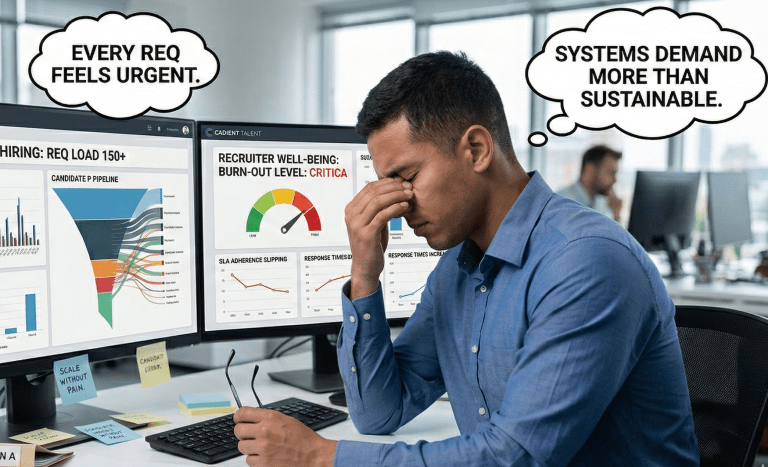
Many challenges in staffing medical organizations make it more difficult to obtain and maintain quality talent in the industry. High turnover rates stem from high patient demand, long work hours, and constant overtime requirements. These conditions cause employee burnout and decreased job satisfaction which could ultimately lead to current employees leaving their current organization for better work opportunities.
If a healthcare company does not have temporary staffing solutions, this could mean full-time medical personnel are tasked with taking on overtime if no one is available to fill their shifts when they leave. Hence, partnering with a travel nurse agency or an allied health staffing company is crucial for quickly bringing in temporary staff. These solutions can handle heightened patient demand and internal staffing shortages.
Certain healthcare organizations need medical personnel with special skills, certifications, or degrees. The increased talent shortages prominent in the industry have made it difficult to obtain qualified professionals needed to serve patients.
Medical organizations should prioritize having a proficient system in place to handle high application volumes and improve candidate communication during recruitment. Integrating with an ATS could be the solution to the problem.
The Role of An Integrated ATS in Healthcare Recruiting Operations

An integrated applicant tracking system (ATS) streamlines healthcare recruiting, which enhances time-to-hire and ensures continued patient care. Recruiters and hiring managers can tap into this one centralized platform in their organization to post open requisitions, access completed applications, analyze cover letters and resumes, and send personalized communication to candidates.
An ATS streamlines workflows by reducing the administrative burden on the recruitment team with having to complete repetitive work involving candidate screening and interview scheduling. This technology also enhances candidate management to where you can organize applicants into various pools based on skill sets, qualifications, educational background, and certifications. Hence, this is a better approach to matching candidates to the right role based on their technical skills and qualifications.
A great ATS ensures the best candidate communication measures to keep them engaged during the healthcare staffing process. While the old-school correspondence method is reaching out to candidates via email, new modern norms have now shifted to employers utilizing texting solutions for candidate outreach.
Cadient’s Text Apply gathers a candidate’s personal information before the automated system sends a link to their mobile device containing an application link. Cadient Notify reminds candidates about scheduled interviews, institutes follow-up messages post-interview, and conducts check-ins every so often even if they are not hired immediately.
Leveraging Data-Driven Recruiting Measures

Data-driven recruitment is essential for maintaining scaled healthcare recruiting operations. By analyzing key performance indicators (KPIs), this activity can increase candidate quality to enhance patient care overall. Such metrics include cost-per-hire, candidate sources, and time-to-hire.
Evaluating time-to-hire can give insight into other strategies to improve the metric. A longer hiring process can lead to missing out on quality candidates who become disengaged. Hence, scaling recruitment solutions with an integrated ATS can help with this issue.
Cost-per-hire is one of the most critical KPIs to manage. Depending on the medical organization, replacing an employee can cost as much as three to four times the upcoming employee’s salary. Reducing recruitment costs is essential for maintaining a higher profit and handling spiking turnover rates. Lower hiring expenditures by refining candidate sourcing channels and posting evergreen job descriptions instead of the paid ads required to get an open requisition noticed on a job board.
Take measures to reduce cost-per-hire by only tapping into the most successful candidate sources and removing the ones that don’t work for your company. Hence, you can allocate resources to the best candidate sourcing channels while saving money by withdrawing from the unsuccessful platforms.
Automating Administrative Tasks
Task automation is vital for recruitment success in healthcare. Reducing the administrative burden on the recruitment team by lessening the repetitive tasks they have to complete will ensure they have enough time for personalized candidate outreach and other important hiring endeavors.
Access to an integrated ATS automates tasks like interview scheduling, sending out application receipts, candidate screening, and conducting initial assessments. Automating tasks improves the candidate management experience. It reduces the extra time it takes to manually review applications and resumes for candidate screening the old-fashioned way. Especially when it comes to automated updates to candidates, this is important for keeping applicants engaged through the hiring process so they do not lose interest.
Scaling With Efficiency and Compliance
While scaling healthcare recruiting operations, it’s essential to maintain compliance with hiring laws and regulations. An integrated ATS has all the available documentation you need for new hires to sign, depending on their position status. For example, traveling nurses will sign a contract stating how long their services are needed before they start working at a healthcare organization temporarily. However, part-time and full-time employees will have to sign a W-4 for tax withholding.
Especially if a healthcare organization has multiple locations, an integrated ATS with these virtual documents available for new hires reduces the risk of non-compliance. Additional screening measures before onboarding healthcare professionals such as a drug screening, background check, employment assessment, and verification of licensure or certification are essential for onboarding the highest-quality candidates.
Conclusion
Enhancing medical recruitment measures is more than increasing application volume or bringing just anybody to fill a position. Maintaining compliance with hiring regulations is essential for recruitment success. Utilizing an integrated ATS with AI-driven screening features can hasten time-to-hire while reducing the administrative burden on the recruiting team. Hence, scaling the recruitment process saves time and money for healthcare organizations.