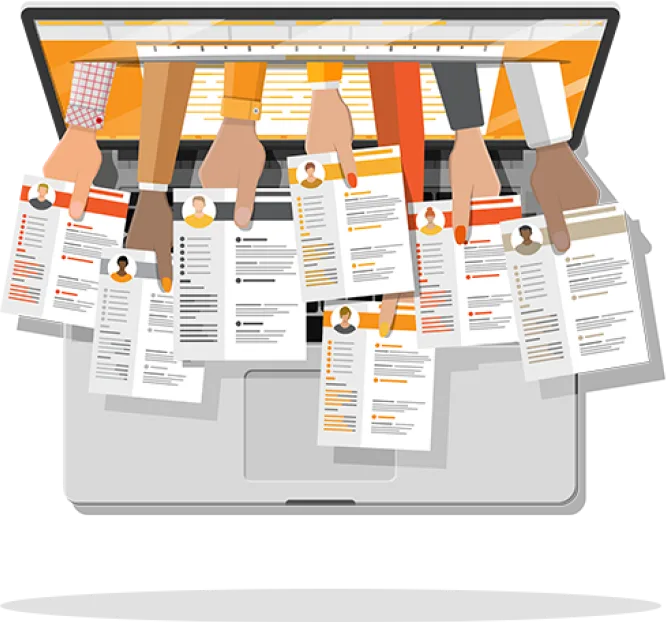

Uh-oh. One of your employees just sent their resignation letter to your desk, and their last day at your company is in two weeks. This is why having high-quality recruitment CRM software in your company’s arsenal is pivotal to overall success in keeping the unit staffed and ready to serve your clients.
Let’s discuss the basics of recruitment CRM software, its benefits, and the differences between CRM and ATS software. Analyzing these variables will help you understand why having such software is more beneficial than disadvantageous.
What Is Recruitment CRM Software?
The CRM in recruitment CRM software stands for candidate relationship management. It focuses primarily on talent acquisition by guiding job candidates through a more seamless application and hiring process.
Whether the candidate is hired or not, the software aims to maintain a positive relationship with these candidates. A new position may open within a few months to a year later. However, recruitment CRM software keeps the connection between the company and the potential candidate so it’s an easier hiring process in the future.
The Benefits of Recruitment CRM Software
Many benefits of holding CRM software will advance your company’s hiring process. From an enhanced candidate experience to having access to data-driven insights, using this software will automate various tasks in the hiring process. This will allow your recruitment team to streamline their tasks to be more productive and efficient.

Enhanced Candidate Experience
Candidates are more likely to finish their applications end-to-end if your company leverages high-quality recruitment CRM software. Features such as auto-fill fields from attaching a resume can make the application process easier. Rather than filling out everything word-for-word, attaching one’s resume can autofill pertinent information like past positions and job skills. Of course, some editing may be needed if the software does not autofill everything correctly, but it will make the application process more seamless with less time typing everything manually.
Automated emails update the applicant through the process. These emails are usually sent when an application is submitted, if an HR representative viewed the application, and whether or not the applicant was selected for employment. Keeping applicants in the loop improves the candidate experience. If they do not qualify for one position they applied to, they may return and try for another just because of the good quality of the CRM software.
Streamlined Candidate Data
The Equal Employment Opportunity Commission (EEOC) mandates that companies keep completed employment applications on file for at least one year. As each candidate submits their application, it’s streamlined into one database for easy retrieval amongst company representatives for when the time comes to fill a position. Should the application expire after a year and the candidate reapplies, the recruitment team will have access to the most updated information available on that candidate to make hiring decisions.
Better Talent Pool Management

Recruitment CRM software’s ability to build and maintain a talent pool is pivotal for long-term benefits through the recruitment process. Recruitment team personnel can divide the talent pools based on various aspects of the candidates’ profiles.
For example, they can separate the remote candidates from the local candidates who can physically report to headquarters. Another talent pool can involve separating entry-level candidates from applicants with 5 or more years of experience in the position in question. A tertiary example of a talent pool could be separating candidates based on different job skills. For example, if you are hiring a Content Writer for your website, you may separate candidates with SEO and editing experience versus those who lack those skills.
No matter how you create these talent pools, they will hasten the recruitment process by delving into accumulated applications in the CRM software rather than waiting for new talent to apply for the position.
Automated Recruitment Process
Automated features are essential for high-quality recruitment CRM software. Candidates can sign up for an automated email list where your team can send updated position descriptions within the company every 2-4 weeks so it keeps the talent pool growing. Rather than typing out an update email for the recruitment process, recruitment personnel can send an automated message asking for an interview or updating a candidate on the status of their application.
Automating such tasks with this software helps the recruitment team use their time more wisely for more involved engagements. Reviewing resumes, completing reference checks, and interviewing candidates is the more involved tasks for a recruitment team that can be more focused on thanks to CRM software automation for the smaller tasks.
Data-Driven Insights
CRM software unveils various data-driven insights that can guide you in refining your recruitment strategy. Such tracked data may include time-to-fill, which involves notating how many days it takes to fill a company position and where the hire is sourced from, whether internally or externally. Evaluating the candidate conversion rate can reveal how effectively the job posting is written. It’s calculated as the percentage of job seekers who complete an application after reading the job posting. If the time-to-fill and candidate conversion rates are low, improving the job post’s written quality could increase them.
The Differences Between CRM Software and ATS Software

The ATS in ATS software stands for Applicant Tracking System. Cadient’s ATS software has hired more than 7 million individuals over the past 15 years for big companies like Costco Wholesale, Journeys, ShopRite, and more!
What is the secret to Cadient’s ATS software’s success? Their hiring management console retains talent to optimize their time-to-fill rates and decreases recruitment costs by pulling from a talent pool rather than releasing new job posts to gather new talent.
While CRM software and ATS software may seem the same, they have varying differences. ATS software’s main goal is to obtain and store resumes for long-term hiring as positions become open. Recruitment CRM software harvests and maintains relationships between the company and its potential candidates.
Both systems assist hiring managers in properly storing resumes for reference when positions open. However, ATS software prioritizes automatic responses to candidates through the application process, while the CRM software streamlines finding past candidate applications based on a specific talent to reach out to them more quickly.