Sports professionals undergo many challenges in their games. Balls rebound, the other team gains possession of the ball, and sometimes sports players are left with little time to win the game.
Challenges in healthcare recruitment are almost like a high-stakes sports game where every play counts. The game in the medical industry is recruiting top talent while the plays manifest themselves through different recruitment strategies along the way. Just like how athletes have to navigate in-game obstacles, healthcare recruiters must navigate unforeseen challenges like talent shortages and changing employment regulations.
What Are the Challenges in Healthcare Recruitment?

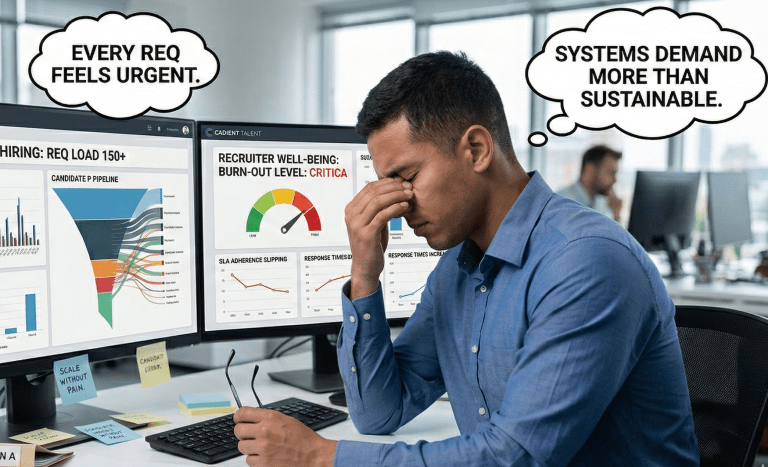
Many obstacles are overcoming the medical industry to where it’s more difficult for healthcare personnel to offer proper patient care. A lack of staff in these facilities increases wait times, decreases patient satisfaction, and instills a ripple effect that negatively impacts the remaining staff and the general healthcare system.
Lack of Qualified Candidates
Staffing shortages in healthcare continue to be prominent. Hence, there is a deficit of nurses, doctors, and other medical personnel that is not meeting patient demand from a heightened aging population.
Oracle reported that 6.5 million medical professionals will leave their organizations by 2026, but only a projected 1.9 million new healthcare personnel will replace these individuals. Such a gap is breathtaking because the insufficient number of healthcare professionals throughout the nation will continue to not be able to handle the aging population. By examining the changes between the 2010 and 2020 Census, elderly individuals aged 65 and up rose by 38.6% to 55.8 million people throughout America.
Burnout and Job Satisfaction
Burnout is a constant issue that candidates are thinking about what could happen as they apply for healthcare jobs. The American Nurses Foundation reports that 56% of surveyed nurses regularly feel burnout. Due to long hours of 12 to 16-hour shifts and sometimes medical personnel having to do overtime to meet patient demand, these issues can decrease job satisfaction. This leads to the problems with high turnover in the industry.
Geographic Disparities
Rural areas are usually overlooked when medical personnel are applying for jobs. They are a further drive compared to open requisitions stationed in larger city metros with higher popularity of attracting more healthcare professionals. Medical professionals’ lifestyle choices could also drive them to live in more urban areas and seek employment there rather than the underserved rural areas. Unfortunately, this is why some patients have to drive from their rural homes to urban offices if there isn’t a nearby office.
Administrative Burdens
Healthcare recruiting causes extensive administrative burdens with prolonged background checks and credentialing requirements if promising candidates need to enhance their education and certifications before being onboarded. If a medical organization’s recruitment process isn’t streamlined with an applicant tracking system (ATS), the longer hiring process can make candidates lose interest and seek other opportunities.
Embracing Innovative Recruitment Techniques

Varying your recruitment techniques will hasten time-to-hire for your medical organization. By combining advanced technologies with data-driven decision-making and other hiring techniques, they enhance employee retention rates.
Leveraging Technology
Integrating advanced hiring technologies will reduce the challenges in healthcare recruitment because of streamlined procedures. As we mentioned earlier, an ATS can streamline all steps in the recruitment process with a centralized hub for storing and accessing every candidate’s information.
Telehealth recruiting takes place when hiring managers and the recruitment team offer virtual interviews and assessments for interested candidates. This technique ensures more convenient scheduling for both parties. Recruiters can send a text to candidates with a link to self-schedule the interview based on the available time slots that also work for the recruitment team.
Video interviewing is another technological advancement that brings the interview experience to anywhere the candidates and recruiters are. Rather than the candidate driving an “x” amount of miles to the job’s headquarters, video interviewing solutions reduce the world’s carbon footprint while enhancing convenience for both parties’ schedules.
Data-Driven Decision Making
Data-driven decision-making is one of the most essential innovative recruitment techniques. Utilizing various recruitment metrics will ensure that only the top candidates are onboarded with the company. This approach enhances candidate quality and reduces turnover rates that could happen from potentially encountering a bad hire.
Analyzing predictive analytics is essential for predicting future staffing needs based on the examination of candidate preferences. Hence, this causes a better strategic planning initiative for future hiring campaigns.
Evaluating performance metrics in recruitment showcases how the current recruitment process is doing for the medical organization. Noticing disparities in these metrics can open the door to hiring innovations for onboarding new talent. Examining time-to-hire, cost-per-hire, candidate sources, and other metrics will enhance operational efficiency as time goes on.
Personalized Candidate Engagement
Candidate engagement is an important measure to consider during healthcare recruitment. Lack of candidate engagement will lead to higher candidate drop-off rates and a more difficult time obtaining a solid applicant pool.
Tailored communication measures can make candidates feel valued during the onboarding process. For example, you can use Cadient’s Text Notify to follow up after a candidate places an application to schedule an interview or follow up after one. Even if candidates are not immediately hired, tailoring personal messages to follow up with them could help them consider your organization when the opportunity presents itself.
Employer Branding
Healthcare employer branding is vital for enhancing recruitment success. Exhibiting a strong company culture with solid values and ethics is attractive to job-hunting candidates.
You can showcase written or video testimonials from employees showcasing their experience with working for your medical organization. Don’t forget to incorporate your mission and vision statement somewhere on this same website page.
Creative Sourcing Strategies
Find ways to creatively source candidates beyond posting open requisitions on job boards and social media platforms. Start an employee referral program to expedite time-to-hire with suggestions for new team members from internal employees. Another tactic would be to have evergreen job postings on your website and all other sourcing channels to build a steady stream of applicants in your hiring database.