Have you ever joined a VIP loyalty program at your favorite retail store? That means you and other loyalty club members gain access to exclusive store-related offers whether it’s saving perks accessible on the store app or increased discounts during special in-store sales events.
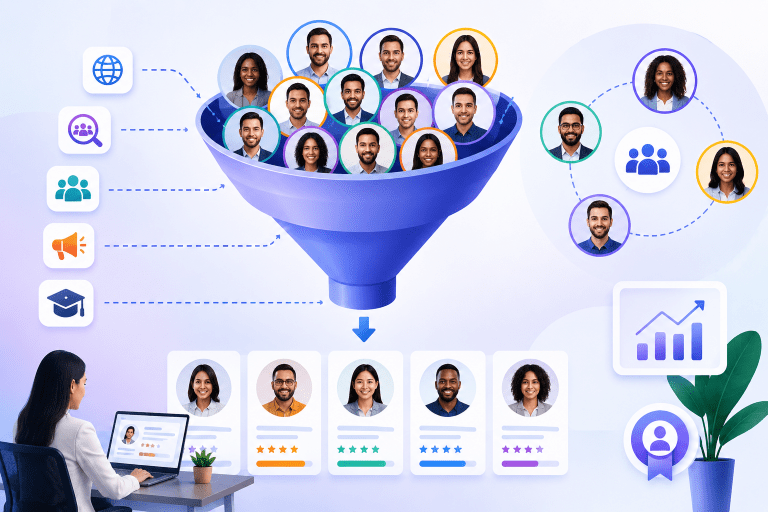
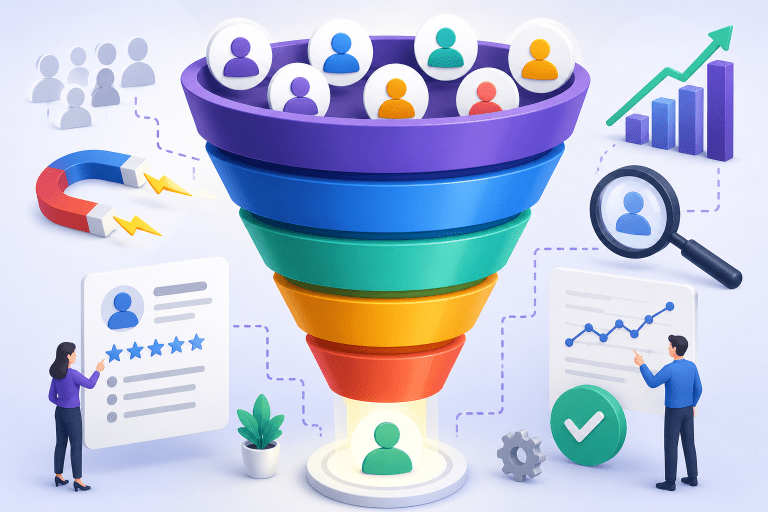
In applicant pooling, people enter by showing interest in an open requisition with a company. Eventually, based on their skill sets and past educational and job experiences, they are divided into talent pools that recruitment teams eventually draw from to hire the highest quality candidates. Hence, applicant pooling is almost like joining a VIP store loyalty program if you land in one of the company’s talent pools.
Understanding the Applicant Pool Definition

An applicant pool is a group of interested candidates who want to join a company. They may have shown interest by applying, responding to a job post in some way, or being sourced in some other way. For example, a recruitment representative scoping possible new hires on LinkedIn may reach out to a quality candidate to let them know about their open requisitions. We will talk more about applicant pool sourcing techniques later!
What is an applicant pool and who is included in it? A mix of active and passive candidates can be included in an applicant pool. The quality of candidates inside the talent pool and its overall size significantly impact overall hiring effectiveness.
The Importance of Applicant Pool Management
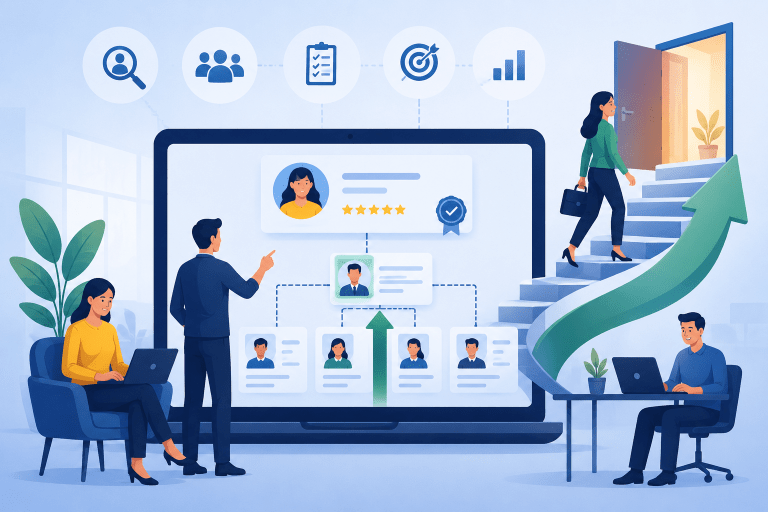
Building an applicant pool for recruitment is only one side of the coin. The other side of the coin is managing the talent pool accordingly. Organizing candidates into various groups within the pool, evaluating their skills and experiences, and communicating with the most qualified applicants are all tasks related to applicant pool management. Ensuring to keep clear records, sorting applications based on candidate qualifications, and communicating regularly with candidates to maintain engagement are also essential to managing the talent pool.
Applicant pooling is more effective by leveraging the latest recruitment technologies to get the job done. An applicant tracking system (ATS) assists with AI-driven application screening and resume parsing to shuffle through candidates’ applications more efficiently.
The technology can also help with automated candidate communications. Its integrated text-to-apply software can reach out to multiple candidates at one time via a mass text with information about an open requisition. From there, a candidate can text back and an AI chatbot will respond with questions to build an initial candidate profile. The chatbot will ask questions about the candidate’s name, phone number, email address, date of birth, and home address. Once the candidate profile is complete, the chatbot will submit a link to the candidate via text. Connecting with candidates through text recruitment solutions increases candidate engagement and drives faster hiring results.
Applicant Pool Sourcing Techniques

Implementing various strategies to attract various candidates to the pool is important for a streamlined hiring process. Posting job advertisements on job boards, the company website, and social media platforms remains the traditional and effective method for gathering more candidates.
However, it’s best to take on unique candidate sourcing techniques to diversify your talent pool to access a wider range of applicants with different skills, educational backgrounds, and past job experiences.
Here are more ideas for applicant pool sourcing techniques beyond the LinkedIn example we shared earlier:
- Social media recruiting: Use popular hashtags related to your industry on social media platforms like Facebook and Twitter to find possible candidates. This is a great tactic to find candidates for remote positions, but it can also work for finding local candidates to staff brick-and-mortar locations if done strategically enough.
- Employee referral programs: Current employees can refer individuals from their personal and professional networks to open requisitions in the company. Both the referring employee and new hire can be rewarded with monetary incentives once the new hire hits the 90th day of their tenure.
- Job fairs and networking events: Networking events are great for engaging with passive candidates to build the talent pool. Job fairs are best for interacting with active candidates for a faster hiring experience.
- Talent pools: Certain candidates in the applicant pool may not be suited for the open requisition as of current. However, divide them into specific talent pools so you are ready to contact them when a suitable position opens up for them.
Unique Ways to Expand Your Company’s Talent Pool
Your recruitment team should always be collaborating to discover innovative ways to expand the company’s talent pool. Having at least a once-a-month virtual or in-person meeting to discuss talent pool expansion tactics is essential for future-proofing and streamlining talent acquisition efforts.
Offer internship opportunities at your organization. Whether you decide to offer paid or non-paid internships, individuals desiring to enter the industry would desire the experience either way. Hence, this intern could be a future new hire for the company part-time or full-time.
Depending on your industry, you can offer volunteer opportunities as a way to expand your talent pool. Hospitals, libraries, animal shelters, and non-profit organizations are all great places that usually offer volunteer opportunities to qualified community members. As these volunteers build their experience in helping out the company without pay, this can be a resume builder and eventually lead to regular employment with the business.
The Impact of An Applicant Pool on the Hiring Process

An applicant pool for recruitment impacts the hiring process in multiple ways. This recruitment practice gives you a broader range of candidates to select from when filling an open requisition. Applicant pooling is especially effective for high-volume recruitment because there are already candidates accessible for the recruitment team to begin the hiring process immediately. Choosing a candidate from an applicant pool also reduces bias in the hiring process because of the technology involved in streamlining the selection portion.