By Abhishek Patel · May 7, 2026
If you’re a CHRO or talent‑acquisition leader, you’ve probably heard the buzz: AI hiring for enterprises is no longer a futuristic fantasy. It’s happening now, and the pressure to prove value is real. In the next few minutes I’ll walk you through why AI is a game‑changer, how to roll it out without breaking the bank, and what numbers you should be watching to convince the CFO.
Introduction to AI in Enterprise Hiring
Tools like SmartMatch™ can sift through thousands of résumés in seconds, flag the most promising candidates, and even run pre‑screening chats. Imagine cutting a week‑long manual review down to a few hours. That’s not hype—it’s the reality for firms that have adopted enterprise recruitment AI at scale.
Why Organizations Are Adopting AI Recruitment Solutions
Time‑to‑fill is the biggest pain point for fast‑moving businesses. A 2023 Deloitte survey showed 62% of large enterprises report a 30% drop in time‑to‑fill after deploying AI sourcing bots. Cost‑per‑hire follows suit, with savings of $4,500 on average per role at GlobalTech, a multinational software maker.
Beyond dollars, candidate experience jumps. Chat‑powered interview schedulers keep applicants informed 24/7, and tools like SmartScreen™ provide AI‑driven automated phone interviews, with 73% of those surveyed saying they’d recommend the company after a seamless AI‑driven process.
Setting Clear Goals for AI Hiring Implementation
Before you even click “buy,” get crystal clear on what success looks like. Are you chasing a 25% reduction in time‑to‑fill? Or maybe a 15% boost in quality‑of‑hire as measured by 12‑month performance scores? Write those targets into an AI hiring implementation charter and share them with finance, legal, and the recruiting squads.
Now ask yourself: what data will you need? Candidate profiles, hiring manager feedback, and turnover metrics all become the fuel for the AI engine.
Choosing the Right AI Hiring Technology
Not every vendor fits the same mold. Some specialize in sourcing, others in interview simulations. Here’s a quick cheat sheet:
- Sourcing focus: Platforms that crawl LinkedIn, GitHub, and niche job boards.
- Screening focus: Tools that score résumés against role‑specific competencies.
- Assessment focus: Solutions that generate skill‑based tests or AI‑driven video interviews.
When you compare vendors, look for three must‑have features: open APIs for ATS integration, transparent model explainability, and a proven track record of bias mitigation.
Running a Successful AI Recruitment Pilot Program
Pick a high‑volume, low‑risk hiring stream—think seasonal warehouse hires or entry‑level tech interns—as described in How High‑Volume Hiring Platforms Handle Seasonal and Bulk Recruitment Spikes. Set up a control group that uses the existing process, then run the AI‑enhanced workflow side‑by‑side for eight weeks.
Track these metrics:
- Average time‑to‑fill (days)
- Cost per hire (USD)
- Candidate satisfaction (NPS)
- Hiring manager confidence (rating 1‑5)
At the end of the pilot, you’ll have concrete data to answer the CFO’s “what’s the ROI?” question.
Integrating AI Tools with Existing HR Systems
Most enterprises already run an ATS like Workday or iCIMS. The AI layer should sit on top, feeding data through secure webhooks. If you’re also using an HRIS or payroll platform, make sure the AI solution can push interview outcomes back into the employee record.
And don’t forget data mapping. A mismatch between the AI’s skill taxonomy and your internal competency model can cause duplicate work for recruiters, underscoring the need for end‑to‑end workflow design using a recruitment automation platform.
Data Privacy and Security Framework for AI Hiring in Large Enterprises
Handling candidate data at scale means you can’t be lax about privacy. Here’s a framework that has kept GlobalBank compliant across 12 countries:
- Data minimization: Collect only what’s needed for the hiring decision.
- Encryption at rest and in transit: AES‑256 for storage, TLS 1.3 for API calls.
- Access controls: Role‑based permissions, multi‑factor authentication for all admin users.
- Audit trails: Log every data read/write for at least 24 months.
- Third‑party assessments: Annual SOC 2 Type II audits of the AI vendor.
Now, overlay this on GDPR and EEOC requirements. A simple compliance checklist (see below) can keep you from costly fines.
AI Talent Acquisition Platform Vendor Landscape
The market is crowded, but you can group players into three tiers:
| Tier | Key Players | Strengths | Typical Deployments |
|---|---|---|---|
| Emerging | HireVue GPT, TalentBoost AI | Generative interview bots, rapid prototyping | Start‑ups, pilot projects |
| Mature | iCIMS Talent Cloud, SAP SuccessFactors AI | Deep integration, global compliance | Multinational enterprises |
| Specialized | Pymetrics, Pymetrics AI | Bias‑aware assessments, neuroscience‑backed tests | Roles requiring high predictive accuracy |
When you shortlist, match the vendor’s roadmap with your own AI recruitment roadmap. Ask for a product roadmap that shows upcoming bias‑audit features and multilingual support.
Scaling AI Hiring Across Business Units
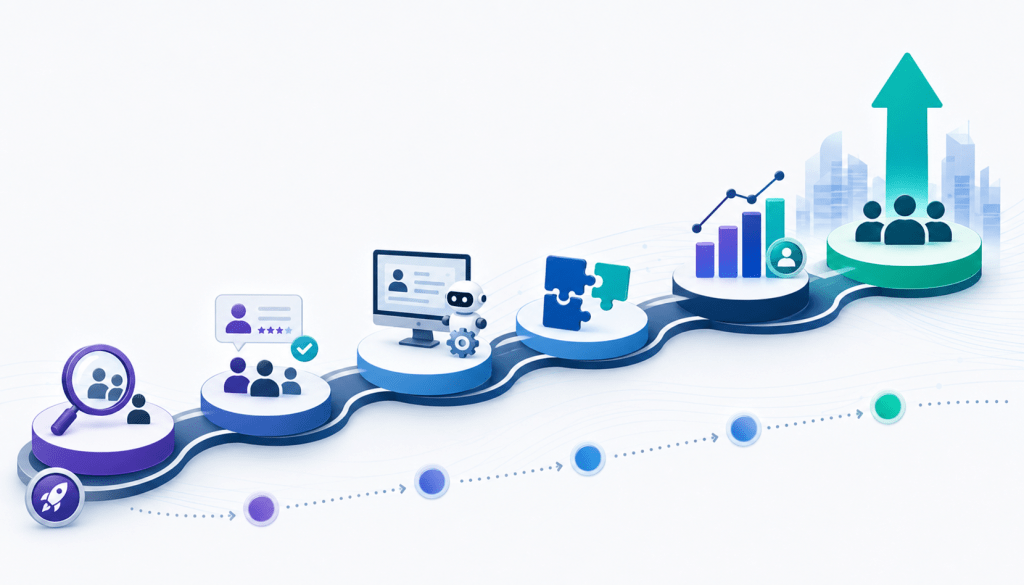
Once the pilot proves its worth, it’s time to go enterprise‑wide. Consider a three‑phase rollout:
- Phase 1 – Core functions: Deploy AI sourcing and screening for all corporate roles.
- Phase 2 – Business‑unit extensions: Add assessment modules for engineering, sales, and operations.
- Phase 3 – Global harmonization: Enable localized language models and region‑specific compliance filters.
Each phase should have a gate review with metrics tied back to the original goals. If Phase 2 doesn’t meet the 20% cost‑per‑hire reduction target, pause and troubleshoot before you move to Phase 3.
Managing Change and Recruiter Adoption
Resistance is natural. Recruiters worry AI will replace them, but avoiding common pitfalls—see Common Mistakes to Avoid in Automated Candidate Screening Systems—can reassure them. The truth? AI handles the grunt work, freeing people to focus on relationship‑building.
Here’s a quick change‑management playbook:
- Kick‑off workshops that showcase real‑time AI demos.
- Champion network: Identify early adopters in each region.
- Feedback loops: Weekly “office hours” with the AI vendor’s support team.
- Performance incentives: Tie recruiter bonuses to AI‑enabled metrics like interview quality scores.
When you let people see the time they’re saving—often 4‑6 hours per week—they become your biggest promoters.
Ensuring Compliance and Ethical AI Hiring Practices
Bias is the elephant in the room. To keep your AI fair, follow these steps:
- Run pre‑deployment bias audits using a balanced test set of protected groups.
- Implement explainable AI, so hiring managers can see why a candidate was ranked.
- Set up a human‑in‑the‑loop checkpoint before final decisions.
- Document all model updates for audit trails.
And don’t forget the legal side. A compliance checklist for multinational enterprises includes:
- GDPR consent forms for EU candidates.
- EEOC adverse impact analysis for US hires.
- Local data‑ residency rules (e.g., Australia’s Notifiable Data Breaches scheme).
- Regular reviews of model drift and retraining schedules.
Measuring ROI and Performance of AI Recruitment
ROI isn’t just a vague notion; it’s a spreadsheet you can show the board. Plug these numbers into an ROI calculator:
| Metric | Pre‑AI Average | Post‑AI Average | Annual Savings |
|---|---|---|---|
| Time‑to‑fill (days) | 45 | 30 | ~$2.1 M (based on 5,000 hires) |
| Cost per hire (USD) | 7,200 | 5,200 | $10 M |
| Recruiter productivity (candidates per week) | 12 | 18 | ~$1.8 M |
Multiply the total savings by the AI solution’s annual license—often a few hundred thousand dollars—and you’ll see a payback period under 12 months in most cases.
Don’t forget softer metrics: candidate NPS, hiring manager satisfaction, and diversity hiring ratios. They’re the early warning signals that the AI is truly adding strategic value.
Generative AI and Predictive Analytics: Next‑Gen Sourcing and Interview Simulations
We’re on the cusp of a new wave. Generative AI can now write personalized outreach messages that boost response rates by 27% (according to a recent BenchMark study). Predictive analytics, fed with performance data, can forecast a new hire’s 12‑month success with 78% accuracy.
Some forward‑thinking firms are already using interview simulation bots that role‑play a sales pitch, scoring candidates on tone, pacing, and objection handling. It sounds sci‑fi, but the ROI numbers are compelling: a 15% lift in quality‑of‑hire for sales teams at a European telecom giant.
The Future of AI‑Driven Talent Acquisition
Looking ahead, conversational AI will handle end‑to‑end candidate journeys, from initial contact to offer acceptance. And as more organizations feed real‑world performance data into the models, predictive hiring will become almost prescriptive.
But remember, technology is only as good as the people governing it. Keep ethics, compliance, and human judgment at the core, and you’ll turn AI hiring from a buzzword into a sustainable competitive advantage.
Key takeaways: define clear goals, start small with a pilot, choose a vendor that matches your integration and bias‑audit needs, build a solid data‑privacy framework, scale methodically, and measure ROI with hard numbers. Follow this roadmap, and you’ll be able to tell your CFO—and your board—exactly how AI hiring for enterprises is driving value today and tomorrow.
Frequently Asked Questions
What ROI can enterprises expect from AI hiring solutions?
Most enterprises report a 20‑30% reduction in time‑to‑fill and a 15‑25% decrease in cost‑per‑hire within the first year, translating into measurable cost savings and higher recruiter productivity. The exact ROI varies based on implementation scale, existing workflows, and the specific AI vendor.
How long does it typically take to pilot an AI recruitment tool before a full rollout?
A typical pilot runs 8‑12 weeks, covering end‑to‑end candidate flow for a single business unit or job family. This timeframe allows teams to collect performance data, refine models, and assess user adoption before scaling.
What data privacy regulations must be considered when implementing AI hiring?
Enterprises must comply with GDPR in the EU, CCPA/CPRA in California, and other local privacy laws that govern candidate data consent, storage, and processing. Additionally, AI‑specific guidance such as the EU AI Act may impose transparency and fairness obligations on hiring algorithms.
How can AI hiring tools reduce unconscious bias in the selection process?
AI tools can anonymize resumes, standardize evaluation criteria, and flag patterns that indicate bias, helping recruiters focus on skill‑based metrics. However, bias mitigation depends on using diverse training data and continuous monitoring of algorithmic outcomes.
What integration challenges arise when connecting AI hiring platforms with existing ATS or HRIS systems?
Common challenges include data mapping inconsistencies, API compatibility, and maintaining real‑time sync across systems. Successful integration typically requires a middleware layer or vendor‑provided connectors and close collaboration between IT, HR, and the AI vendor.