By Abhishek Patel · May 7, 2026
When you’re racing to open new stores in ten cities or launching a tech hub across three continents, the scalable recruitment solution becomes your secret weapon. It’s not just about stuffing resumes into a system; it’s about keeping speed, quality, and brand consistency alive as you grow. In the first 90 days, a well‑designed platform can shave weeks off time‑to‑fill and cut sourcing costs by up to 30%. What if you could manage every interview, every offer, and every compliance check from a single dashboard? That’s the promise of a truly enterprise‑grade approach.
What Is a Multi-Location Recruitment Solution?
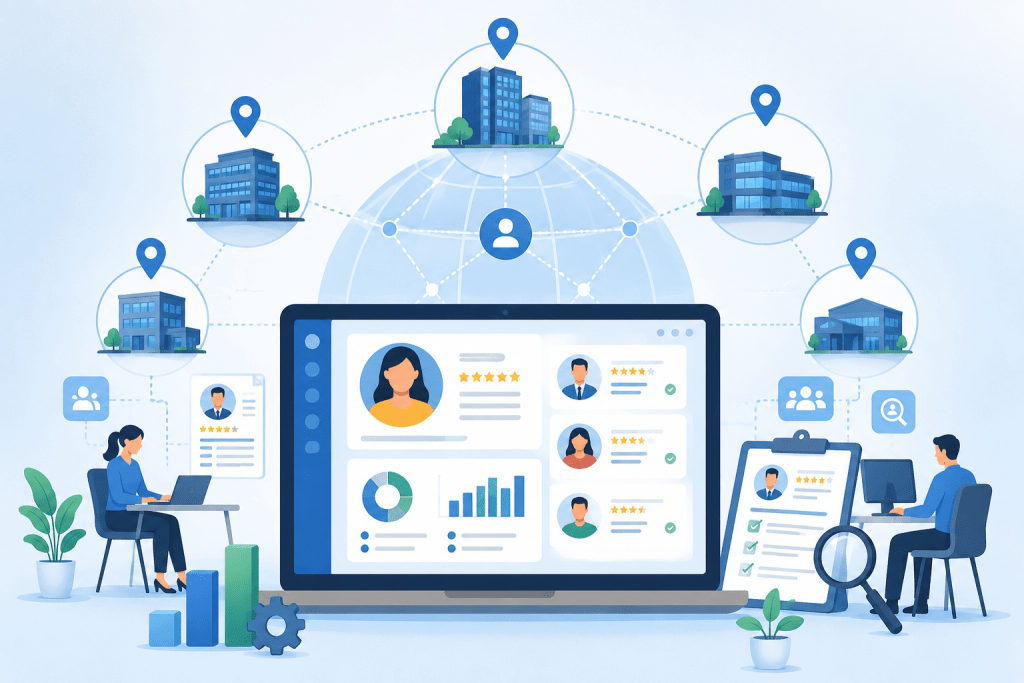
A multi‑location recruitment solution is a technology and process bundle that lets you run hiring campaigns side‑by‑side in different markets. Think of it as a centralized hiring process that still respects local nuances—language, labor laws, and cultural branding. Companies like Domino’s use a single cloud ATS to staff thousands of stores worldwide, yet each regional manager sees only the data they need. The result? A unified talent pipeline without the silo‑induced headaches that slow growth.
Key Challenges in Multi-Location Hiring
First, data silos pop up when each office runs its own ATS. You end up with duplicate candidates and inconsistent reporting. Second, branding drifts; a job ad that sounds fresh in New York can feel off‑key in Bangkok. Third, compliance variance—what’s legal in Texas can be a red flag in Germany. When seasonal or bulk recruitment spikes hit, understanding how high‑volume hiring platforms cope is essential — see our guide on how high‑volume hiring platforms handle seasonal and bulk recruitment spikes.
Core Features of a Scalable Recruitment Solution
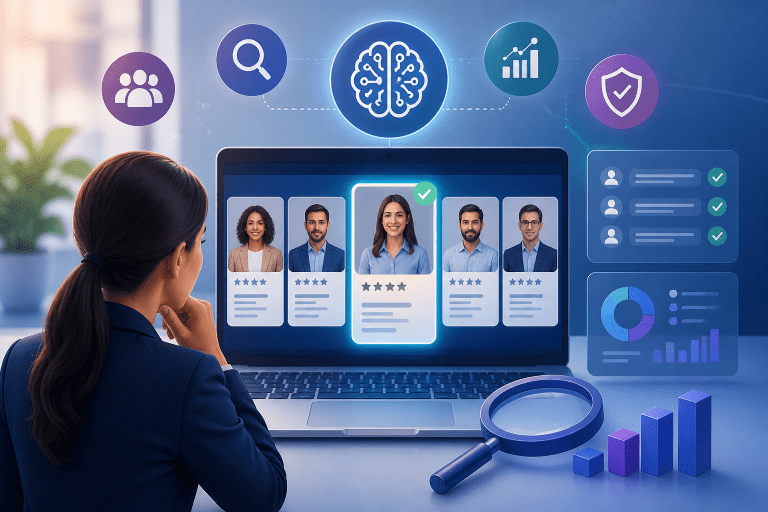
To tame that chaos you need a few non‑negotiables. Tools like SmartSource™ automate sourcing by pulling talent from LinkedIn, niche boards, and internal databases at once. AI‑driven screening tags candidates by skill match, location preference, and cultural fit, slashing manual review time by 40%. Designing an end‑to‑end workflow with a recruitment automation platform ensures that a hiring manager in Chicago can approve offers while a recruiter in Dubai schedules interviews — learn more in our end‑to‑end workflow design guide. Real‑time dashboards show headcount, time‑to‑fill, and quality scores in a single view. And a robust API layer stitches the ATS to HRIS, payroll, and background‑check systems for a seamless data flow.
How Recruitment Automation for Enterprises Supports Distributed Hiring
Automation isn’t a buzzword; it’s the engine that fuels speed. Imagine a candidate applying in Sydney; the system instantly scores the résumé, sends a pre‑screening questionnaire, and books a video interview with a local recruiter—all without human touch. Solutions such as SmartHire™ provide a unified ATS that centralizes multi‑location hiring workflows, role‑based access, compliance checks, and real‑time pipeline visibility. This kind of recruitment automation for enterprises frees up recruiters to focus on relationship building, not paperwork.
Best Practices for Scaling Recruitment Across Multiple Locations
Start with a clear multi‑location recruitment strategy. Map out the hiring timeline for each market, align it with business goals, and assign a “local champion” who owns the talent brand. Standardize job templates but leave room for local language tweaks. Implement a centralized talent pool that every region can draw from, yet track usage so you know where talent is flowing. Finally, run sprint recruiting cycles—two‑week bursts focused on a single role—to keep momentum high and avoid burnout.
Role of Analytics in Multi-Branch Recruitment Management
Data tells you where the funnel leaks. By monitoring metrics like offer acceptance rate by region, you can spot whether compensation is the issue in one city or whether the interview process drags in another. To move beyond simple performance and retention metrics, explore our advanced quality of hire analytics for deeper insights into candidate impact. In short, analytics turns reactive hiring into proactive talent planning.
Technology Stack Needed for Enterprise Hiring Scalability
A cloud‑based ATS forms the foundation, hosted on a provider with ISO 27001 certification to keep data safe. Layer on an integration platform‑as‑a‑service (iPaaS) that connects the ATS to HRIS, payroll, and background‑check vendors via RESTful APIs. Add an AI engine that handles resume parsing and candidate matching, and a scheduling tool that syncs with Outlook and Google Calendar. Finally, a BI layer—think Power BI or Tableau—visualizes the metrics that matter. This stack creates a scalable hiring solution that grows with you.
Benefits of a Scalable Recruitment System
Cost reduction is the most immediate win; companies report a 20‑25% drop in per‑hire spend after moving to a unified platform. Time‑to‑hire shrinks because automation eliminates bottlenecks. Candidate experience improves too—consistent communication, faster feedback, and a single portal for status updates. And because data lives in one place, compliance audits become a breeze, keeping you out of legal trouble.
Future Trends in Multi-Location Talent Acquisition
The next wave brings AI interview assistants that evaluate soft skills in real time, and VR onboarding experiences that give new hires a digital office tour before day one. Decentralized talent marketplaces will let freelancers plug into your internal talent pool, expanding the reach of a high‑volume recruitment system. As remote work settles in, distributed workforce hiring will require even tighter data governance and real‑time collaboration tools.
High‑Volume Temporary Staffing Playbook
When a retailer needs 3,000 seasonal cashiers, a sprint recruiting model—combined with AI sourcing—to flood the pipeline works wonders. The playbook starts with a keyword‑rich job ad, then blasts it across social, job boards, and alumni networks. Automated interview bots filter out unqualified applicants, leaving recruiters to focus on the top 10%.
RPO Partnership Models for Fluctuating Hiring Needs
Some firms outsource the entire hiring engine to a Recruitment Process Outsourcing (RPO) partner. The partner scales up staff during peaks and scales down during lulls, all while using the client’s brand guidelines. This flexibility aligns perfectly with a scalable hiring solution mindset.
Agile Recruiting Strategy for Fast‑Growth Startups
Startups often adopt an agile approach: weekly planning, kanban boards for candidate stages, and rapid retrospectives to tweak messaging. The key is keeping the process light enough to pivot, yet structured enough to maintain data integrity across locations.
Step‑by‑Step Scalable Hiring Process Guides
1. Define demand and create a job requisition.
2. Publish a standardized yet localized ad.
3. Enable AI sourcing and auto‑screening.
4. Schedule interviews via a unified calendar.
5. Run compliance checks automatically.
6. Send offer letters with e‑signature.
7. Onboard through a digital portal.
Centralized Talent Pool and Data Governance Across Locations
A single repository for all candidate data reduces duplication and ensures every recruiter works from the same source of truth. Governance policies dictate who can edit, view, or delete records, protecting personal information under GDPR, CCPA, and other regimes.
Compliance and Data Security Considerations for Distributed Hiring
Each jurisdiction has its own rules about storing candidate data. A robust system encrypts data at rest and in transit, logs every access, and offers audit trails for regulators. Moreover, role‑based permissions prevent unauthorized edits, keeping the hiring process clean and lawful.
Change Management and Training Roadmap for Scaling Recruiting Teams
Introducing a new platform without a roadmap spells disaster. Start with executive buy‑in, then run pilot programs in two regions. Gather feedback, adjust configurations, and roll out training modules—online videos, live Q&A, and cheat sheets. Celebrate early wins to build momentum, and keep a support desk open for the first 90 days.
In a world where growth means geography, a scalable recruitment solution isn’t optional—it’s essential. By marrying automation, analytics, and a solid tech stack, you can hire fast, stay compliant, and keep your employer brand shining across every market.
Frequently Asked Questions
How can companies ensure a consistent candidate experience across different offices?
By standardizing communication templates, interview processes, and branding guidelines within the recruitment platform, all locations follow the same workflow. Real‑time dashboards allow recruiters to monitor touchpoints and intervene quickly if variations arise.
What cost advantages does a scalable recruitment platform offer for global hiring?
A unified system reduces duplicate licensing, lowers administrative overhead, and minimizes time‑to‑fill, which cuts agency fees and lost productivity. Automation of routine tasks further trims operational expenses across all regions.
Which integration points are essential when connecting a recruitment solution to existing HRIS and payroll systems?
Key integrations include candidate data syncing with the HRIS for onboarding, real‑time job requisition updates, and payroll triggers for new hires. Open APIs and pre‑built connectors ensure data consistency and eliminate manual entry errors.
How does AI‑driven resume screening accelerate hiring in multi‑location recruitment?
AI algorithms quickly rank large applicant pools based on role‑specific criteria, surfacing the most qualified candidates across all sites. This reduces manual screening time, enabling recruiters to focus on high‑impact interviews and shortening the overall hiring cycle.
What metrics should leaders track to evaluate the effectiveness of multi‑location recruitment efforts?
Important KPIs include time‑to‑fill per location, quality‑of‑hire scores, candidate net promoter score (NPS), and cost‑per‑hire across regions. Monitoring these metrics in a centralized dashboard helps identify bottlenecks and optimize resource allocation.