By Abhishek Patel · June 27, 2026
What Is Recruitment Compliance?
When you post a job and start sifting through resumes, you’re stepping into a maze of laws, standards, and ethical expectations. Recruitment compliance means aligning every hiring touch‑point with the rules that protect candidates and your organization. It’s not just about avoiding lawsuits; it’s about building trust, protecting data, and ensuring a fair playing field.
From the EEOC’s anti‑discrimination statutes to the GDPR’s strict data‑privacy mandates, and now the growing wave of AI hiring regulations, each layer adds its own set of obligations. If you ignore even one, you could face hefty fines, brand damage, or a talent pipeline that dries up.
Understanding EEOC Hiring Compliance
The Equal Employment Opportunity Commission (EEOC) sets the baseline for fair hiring in the United States. Title VII, the ADA, and the ADEA are the big three statutes that most employers wrestle with.
- Title VII bars discrimination based on race, color, religion, sex, or national origin.
- ADA protects applicants with disabilities and requires reasonable accommodations.
- ADEA forbids age discrimination against workers 40 and older.
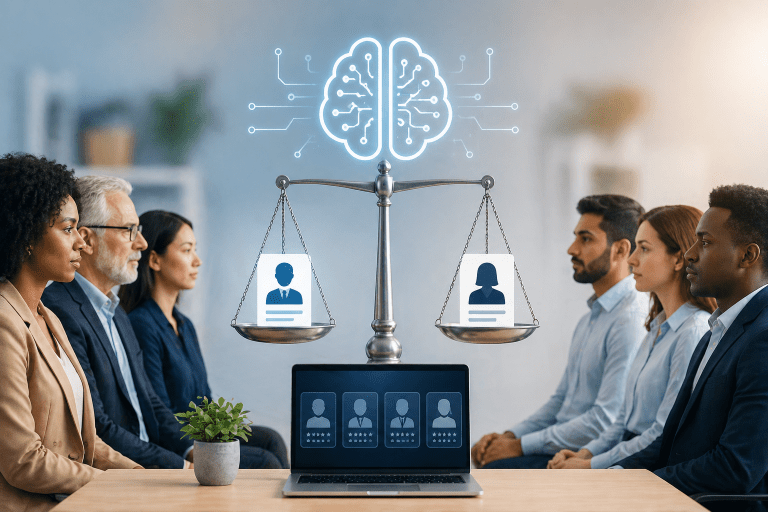
In 2023 the EEOC released guidance on algorithmic bias, urging firms to audit automated screening tools for disparate impact. Do you know how your AI tool scores candidates? If the answer is “not really,” you’re walking a legal tightrope.
Practical steps? Start with a clear EEOC hiring compliance policy, train recruiters on protected classes, and set up regular bias testing. A midsize tech firm I consulted for cut its discrimination complaints by 40% after implementing an annual audit and a simple “no‑question” questionnaire for interviewers.
Understanding GDPR Recruitment Compliance
If you’re hiring talent from the EU, the General Data Protection Regulation (GDPR) is the law of the land. It treats applicant data as personal data, which means you need a lawful basis to collect, process, and store it.
Key articles you’ll hear about include Article 22 (automated decision‑making), Articles 15‑21 (data subject rights), and the right to human intervention when a decision is made by an algorithm. In plain English: if an AI tool rejects a candidate, that person can ask for a manual review.
Many recruiters skip the “right to be forgotten” step—that’s a mistake. A UK‑based recruitment agency I worked with faced a €150,000 fine after a candidate asked for their data to be erased and the agency couldn’t locate it. The lesson? Build a GDPR recruitment compliance framework that maps data flows from the first application to the final offer.
AI Hiring Regulations You Should Know
Artificial intelligence is reshaping talent acquisition, as discussed in our guide to AI‑driven recruitment, but regulators are catching up fast. In the U.S., several states have introduced AI‑specific hiring laws.
- New York City’s Local Law 144 requires employers to disclose any automated decision‑making tools used in hiring and provide candidates with an opt‑out option.
- California is debating an AI Act that would mandate impact assessments and bias mitigation plans for any AI used in employment decisions.
Across the Atlantic, the EU AI Act (still in draft form) classifies recruitment tools as “high‑risk” systems. That means providers must undergo conformity assessments, keep detailed logs, and ensure human oversight.
Staying ahead of these AI hiring regulations isn’t optional. One fintech firm that integrated a new resume‑screening AI without a bias audit was hit with a $75,000 civil penalty after a candidate sued for discriminatory treatment.
Common Recruitment Compliance Challenges
Even seasoned HR teams stumble over a few recurring pitfalls.
- Implicit bias in AI scoring models, often hidden in training data.
- Data residency issues when applicant information lands on servers outside the EU.
- Consent fatigue – candidates click “I agree” without understanding what they’re handing over.
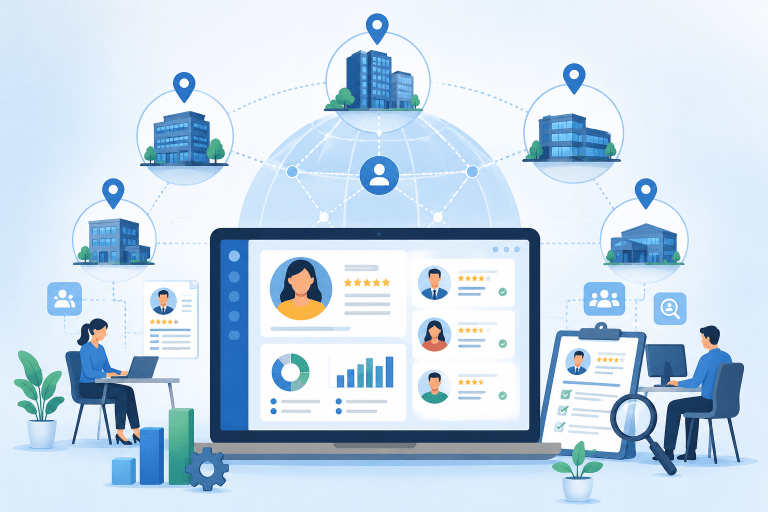
Imagine you’re sourcing candidates for a global engineering role. Your applicant tracking system stores résumés in a U.S. data center, but the majority of applicants are in Germany. Without proper safeguards, you risk violating both GDPR and the upcoming EU AI Act.
Addressing these challenges means conducting regular bias audits, mapping where data lives, and simplifying consent forms so candidates actually know what they’re signing.
Recruitment Compliance Checklist
Here’s a practical, downloadable‑style recruitment compliance checklist you can adapt to any organization.
- Policy Review – Draft a unified policy covering EEOC, GDPR, and AI guidelines.
- Data Mapping – Document every system that captures applicant data and note its geographic location.
- Bias Testing – Run statistical parity tests on AI tools quarterly.
- Consent Management – Use clear, concise consent prompts with opt‑out options.
- Documentation – Keep audit logs for every automated decision, including timestamps and model versions.
- Human Oversight – Assign a compliance officer to review AI rejections before final communication.
- Training – Run mandatory EEOC and GDPR workshops for hiring managers twice a year.
Cross‑checking each item ensures you’re not missing a hidden risk, and it gives you a solid defense if an auditor comes knocking.
How AI Can Improve Recruitment Compliance
Ironically, the very technology that poses compliance risks can also be part of the solution.
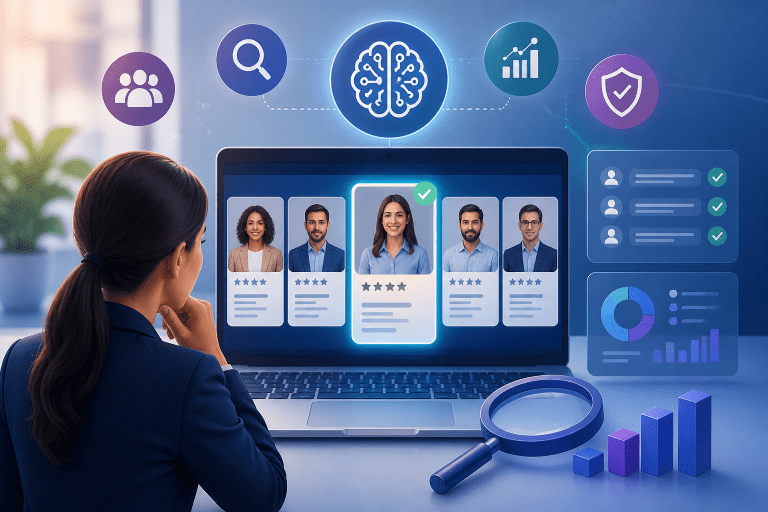
AI‑driven risk‑based screening can flag applications that lack required consent fields, automatically route them for manual review, and even suggest language tweaks to improve accessibility. One multinational retailer used an AI audit tool to monitor its job ads for discriminatory language; the system caught 12 problematic phrases in the first month.
Another benefit is traceability, and tools like SmartScore™ provide the scoring infrastructure that makes this possible. When a candidate is rejected, the AI can generate a transparent decision sheet that links the outcome back to specific data points, satisfying both EEOC documentation requirements and GDPR’s right to explanation.
Best Practices for Compliant AI Hiring
If you’re betting on AI, play it safe with these hiring compliance best practices:
- Choose vendors who provide model documentation and bias‑mitigation reports.
- Layer human review on any decision that involves a score below a pre‑defined threshold.
- Conduct impact assessments whenever you introduce a new algorithm.
- Maintain a clear audit trail that logs who accessed what data and when.
- Stay current on state‑level AI laws—what’s required in New York may differ from California.
My own firm switched from a black‑box resume screener to an open‑source model that we could audit in‑house. The switch added a few weeks to the hiring timeline, but the peace of mind—and the reduction in complaints—was worth every extra day.
International Compliance Beyond GDPR
Global talent acquisition means you can’t stop at the GDPR. The UK’s Data Protection Act mirrors many EU principles but adds its own “adequacy” tests for data transfers. Canada’s PIPEDA requires clear consent and the ability to delete personal information upon request. Australia’s Privacy Act adds the “Australian Privacy Principles,” which demand transparent handling of applicant data.
When you’re hiring a software engineer in Toronto while your ATS is hosted in Dublin, you need to verify that both jurisdictions approve the cross‑border flow. A global fintech I advised set up a “regional data hub” strategy—each region stores its own applicant data, and a central analytics layer accesses it through de‑identification. This approach kept them compliant across the UK, Canada, and the EU.
EU AI Act Implications for Recruitment Software
The EU AI Act, still being drafted, will label recruitment tools as high‑risk. That translates to mandatory conformity assessments, post‑market monitoring, and a requirement to keep human‑in‑the‑loop mechanisms.
What does that mean for you today? Start documenting the purpose, data sources, and performance metrics of any AI you use. Prepare for periodic “technical documentation” submissions to regulators, similar to GDPR’s data protection impact assessments.
One European HR tech startup pre‑emptively built a compliance dashboard that tracks model drift and bias metrics in real time. When the AI Act finally lands, they’ll already have a live reporting system, giving them a competitive edge.
Practical Tech Stack: Tools for Automated Compliance Monitoring & Auditing
Choosing the right tech can make compliance feel like a breeze rather than a burden.
- Data Mapping Platforms – Tools like Collibra or OneTrust help visualise where applicant data lives.
- Bias Auditing Solutions – Packages such as IBM AI Fairness 360 or Pymetrics can run fairness checks on your models.
- Consent Management – Platforms like TrustArc let candidates manage their consent preferences directly.
- Audit Trail Software – CloudTrail for AWS or Azure Monitor can capture every access event for compliance logs.
Combine these with a simple workflow engine (Zapier, Power Automate) to trigger alerts when an AI model’s fairness score dips below 80%. The result? A self‑policing system that helps you stay ahead of EEOC, GDPR, and AI hiring regulations.
Future of Recruitment Compliance
The compliance landscape isn’t static. Emerging trends point to even tighter integration between data privacy and AI transparency.
First, the EEOC is expected to release a “Algorithmic Discrimination” rulebook within the next year, giving clearer metrics for disparate impact analysis. Second, the EU AI Act will likely enforce real‑time reporting for high‑risk systems, nudging vendors to embed explainability features out of the box.
Third, we’ll see more cross‑border collaborations. Companies that can demonstrate a unified compliance posture across the U.S., EU, UK, and Canada will attract top talent who care about ethical hiring.
In my experience, the firms that treat compliance as a strategic advantage—rather than a checklist—end up saving millions in legal costs while building stronger employer brands.
Bottom line: Recruitment compliance today is a three‑pronged challenge of anti‑discrimination law, data‑privacy mandates, and AI governance. By adopting a holistic checklist, leveraging the right tech, and staying ahead of evolving regulations, you can turn compliance from a headache into a hiring superpower.
Frequently Asked Questions
What are the typical penalties for violating EEOC hiring regulations?
Violations can result in civil fines, back‑pay awards, and compensatory damages, plus potential attorney fees. In severe cases, the EEOC may pursue litigation that leads to injunctions or mandatory remediation.
How does GDPR impact the way US employers handle candidate data?
GDPR requires explicit consent, clear privacy notices, and the right for candidates to access, correct, or delete their data. Even US companies processing data of EU residents must implement these safeguards or risk hefty fines.
Which states have enacted specific AI hiring laws and what do they mandate?
New York City (Local Law 1), Illinois (Artificial Intelligence Video Interview Act), and Washington, D.C. have enacted AI hiring rules. They usually require disclosure of AI use, bias testing, and candidates’ right to opt out of automated evaluations.
Can AI tools help reduce hiring bias while staying compliant with EEOC and GDPR?
Yes, if AI models are regularly audited for disparate impact, use transparent criteria, and retain candidate consent records. Proper documentation and human oversight ensure alignment with both EEOC anti‑discrimination standards and GDPR privacy obligations.
What are the key steps for a small business to build a recruitment compliance checklist?
Identify applicable laws (EEOC, GDPR, state AI statutes), map data flows, document consent processes, set up bias‑testing for AI tools, and establish regular training and audit schedules. Keeping the checklist updated with legal changes ensures ongoing compliance.